
How to Find Property Lines Before Starting a Backyard Project
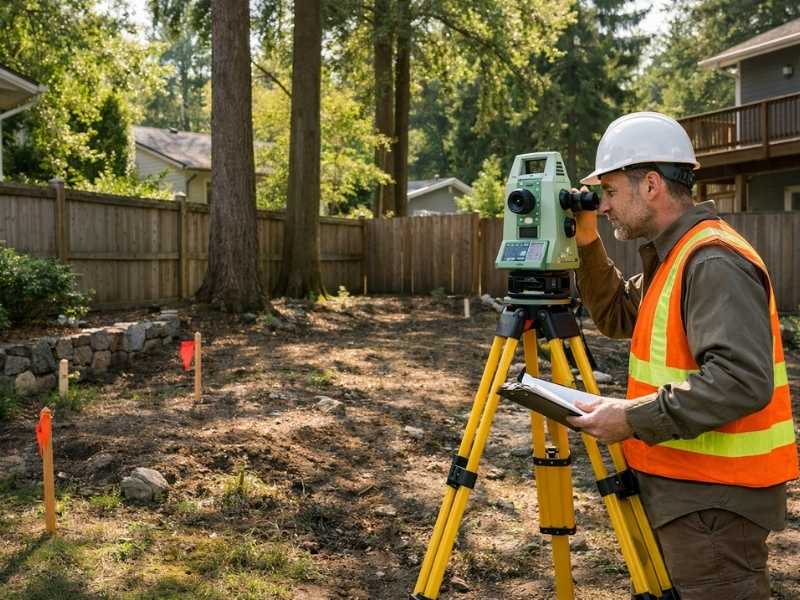
Starting a construction project on a property without knowing your exact boundaries can trigger major legal headaches. You might pour a new patio, put up a privacy fence or build an outdoor kitchen. If your building crew crosses over the official property lines by even an inch, your neighbor can legally force you to tear the whole project down. Finding out how to locate these boundaries keeps your development legal, on schedule and within budget.
Checking the Official Property Records
Local government offices store detailed records for every parcel of land. You can find original subdivision maps at your county recorder or planning office. These papers show the exact shapes and dimensions of the lots in your area.
The legal description on your deed provides the baseline data. It lists the exact angles and distances of your boundaries. You can use these numbers to plan where your backyard equipment can safely dig.
Reading Your Official Map to Find Property Lines
A plot map shows a birds eye view of your land. It notes exactly where your house sits in relation to the outer boundaries.
- Measurements showing the distance from your back wall to the rear line
- Angles that show how your side boundaries turn
- The locations of nearby streets and shared utility zones
- North arrows that help you align the document with your yard
Finding Metal Markers in the Dirt
Past crews usually drove iron pins deep into the ground at every major corner. Over time, grass, dirt and fallen leaves cover up these markers.
Using a Metal Detector to Hunt for Markers
You can rent a commercial locator device to scan your lawn. Sweep the device slowly over the areas where your plot map says the corners should be. The machine will make a sharp sound when it passes over a buried iron pipe or rod.
Digging Carefully at the Corners
Once you get a strong signal, scrape away the top layer of sod with a hand shovel. Do not use heavy machinery for this step. You want to see the top of the metal pin without knocking it out of place.
Spotting Visual Clues Left by Past Builders
Older neighborhoods often have physical indicators that hint at the legal lines. These hints are not official proof, but they help your crew narrow down the search area.
Look for old concrete monuments or wooden hubs buried flush with the soil. You might also spot ancient fence posts or old tree lines that follow a straight path. Compare these items with your deed measurements to see if they align with the official records.
Hiring a Professional to Mark Property Lines
Relying on old fences or your own measurements can lead to expensive mistakes. If your project involves pouring permanent concrete, you need absolute certainty.
A licensed expert uses precision GPS gear and robotic transit tools to map the land. They do the heavy research at the county office to verify conflicting records. They will place bright stakes along the line so your construction crew knows exactly where to stop working.
Getting Legal Clearance Before You Dig
Buried utility lines often run right along the edges of your lot. Hitting a live power cable or a gas main can cause severe injuries and shut down your site for weeks.
Most regions have a free utility location service. You call them a few days before your crew arrives. Workers will come out and spray paint your lawn to show the path of every underground pipe. This step ensures your backyard excavation stays completely safe.
Frequently Asked Questions
Can I use a smartphone app to locate my exact boundaries?
No, phone apps rely on general GPS data that can be off by several feet. They are fine for a rough estimate, but they are not accurate enough for building permanent structures or fences.
What should I do if my neighbor disputes my project location?
Stop all construction work immediately to avoid extra financial risk. Hire a licensed land expert to run a formal boundary assessment. The certified map they produce serves as the official legal proof of your lines.
Are utility easements considered part of my neighbor’s land?
No, you own the land inside an easement, but utility providers have a legal right to access it. You cannot build permanent structures like brick outdoor kitchens or concrete patios inside these zones.
What happens if I cannot find the original iron pins?
If the original markers are missing, you must hire a professional crew to reset them. They will measure from distant neighborhood markers to recalculate and drive new pins into the ground.
Why do old fences often sit in the wrong spot?
Past owners often built fences without checking their deeds, or they placed them inward to avoid trees. A fence shows where someone chose to build, not where the legal line actually sits.
